Frequently Asked Questions

Q: What is acceptable Trust property?
A: SNTC will only accept cash for the Trust fund.
Q: What about non-cash assets that I intend to transfer to my Special Needs Trust fund for my Beneficiary after my demise?
A: You should draw up a will and direct the executor under your will to liquidate the non-cash assets and transfer the cash proceeds to your Special Needs Trust fund set up for your Beneficiary. You can nominate your Central Provident Fund (CPF) savings and insurance payouts to the trust fund.
Q: Can other family members, relatives or friends contribute to the trust fund?
A: Yes, the Trust account serves as an infrastructure to receive future gifts. Other contributors can transfer funds to the Trust account directly or nominate the Trust to receive cash assets in their will.
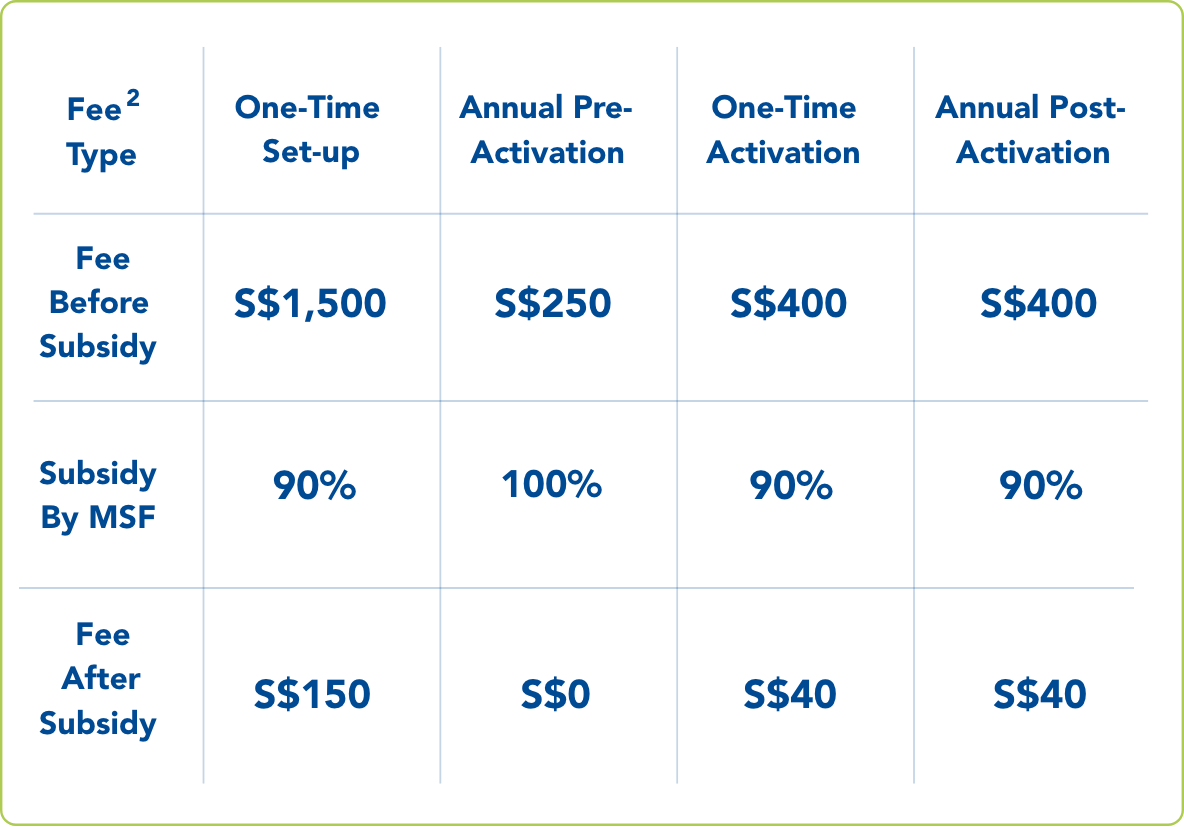
Q: How much must I pay for this Trust service?
A: Service fees are subsidised 90-100% by MSF.
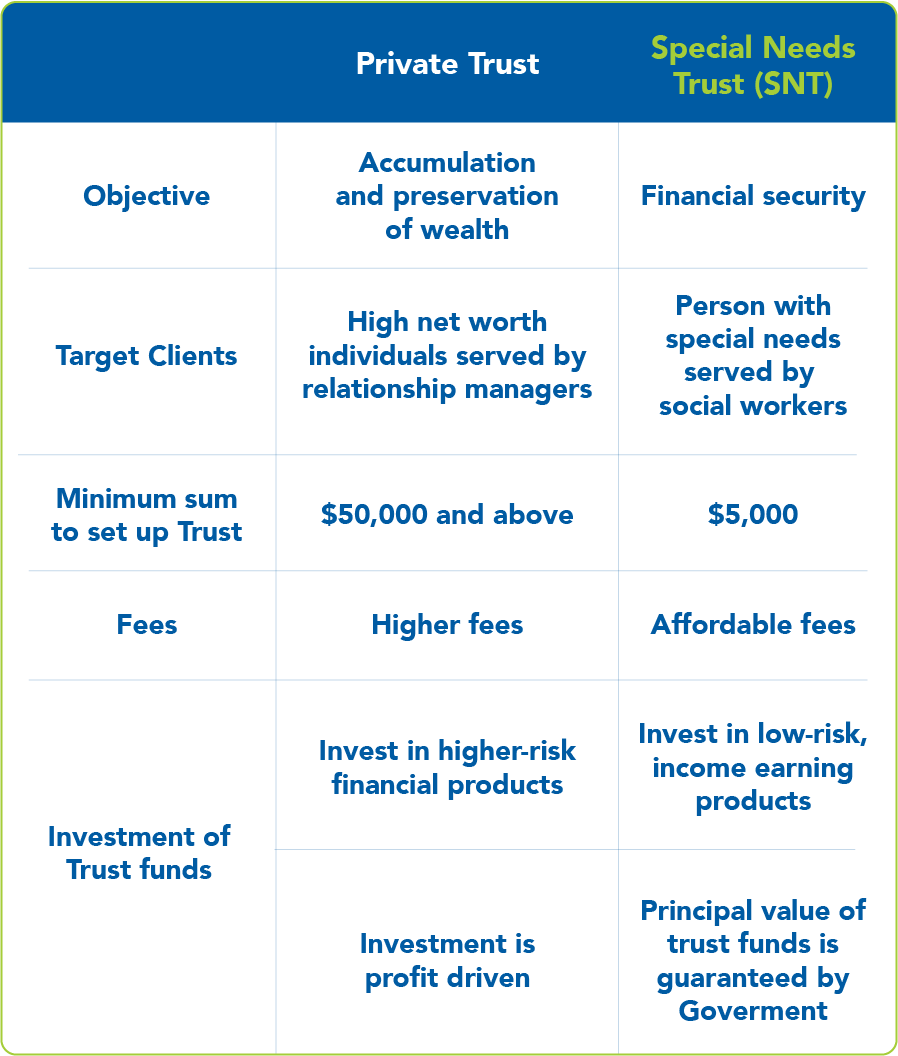
Q: Which Trust should I choose – Private Trust or Non-profit Special Needs Trust?
Q: Is the Trust revocable?
A: Special Needs Trust is irrevocable because this Trust is intended to provide for the financial and care needs of your Beneficiary when you are unable or no longer around to take care of him/her. Once the Trust is set up, it cannot be undone or revoked.
Q: What are the risks associated with setting up a trust fund under the Special Needs Trust (SNT) Trusteeship Scheme?
A: Trust funds under the SNT Trusteeship Scheme are held by the Public Trustee in a Common Fund and invested in low-risk income earning investments. The principal value of your committed funds is guaranteed by the Government. For more information on the Public Trustee’s practices, please visit https://pto.mlaw.gov.sg
Q: When does the Trust start to disburse funds to support the Beneficiary?
A: The Trust account will only commence the disbursement of funds to support the Beneficiary after the death or incapacitation of the caregiver. Any request for disbursement from the Trust prior to this occurrence is subject to SNTC’s approval.
Q: What will happen to the Beneficiary if funds in the Trust is used up in his or her lifetime?
After the Trust is activated, we will continue to review the Beneficiary’s Care Plan and monitor the expenses. We will alert the Beneficiary’s appointed caregiver when the Trust only has sufficient funds to support the Beneficiary for another 5 years. The appointed caregiver will be advised to have the option of topping up the Trust and/or adjust the Beneficiary’s monthly expenses to support the Beneficiary for a longer period of time. We will also refer the appointed caregiver to other resources in the community if necessary.
Q: I am unable to raise enough money to set up an Special Needs Trust. What should I do?
A: You should contact us and speak to one of SG Enable's Case Managers to discuss possible solutions to your problem. We are committed to helping the community of persons with special needs and will look into the possibility of using funds from our donors to help reduce the financial burden of setting up a Trust for your dependant.
Q: Can I specify exactly how I want the Trust to be used for my Beneficiary?
A: Yes. SG Enable's Case Managers will work out a Care Plan with you to consider the financial and care needs of your Beneficiary, and these will be set out in the Letter of Intent to be attached to the Trust Deed.
Q: How are funds disbursed from the Trust?
A: Funds are disbursed from the Trust in accordance with the Letter of Intent, which sets out the expenses required to support the Beneficiary. The care plan is reviewed to ensure that it remains current to the Beneficiary’s needs.
Q: What is specified in the Letter of Intent?
A: The Letter of Intent sets out various aspects of the needs of your Beneficiary such as accommodation, daily living needs (food, clothing, transport etc), educational needs, employment and training needs, medical and dental needs, professional support needs and other areas of concern.
Q: Can the Beneficiary have a say in the Letter of Intent and how funds are disbursed?
A: Yes. If your Beneficiary has lower support needs, we encourage you to bring him/her along to meet SG Enable's Case Managers when the Letter of Intent is being drafted or reviewed.
Q: Can I make changes to the Letter of Intent?
A: Yes, you can make changes to the Letter of Intent and this will be replaced in the Trust Deed. SG Enable's Case Managers will review the Care Plan with you and document any changes you propose.
Q: How is Special Needs Savings Scheme (SNSS) different from the Special Needs Trust (SNT)?
A: SNSS and SNT complement each other. Caregivers who would like to have a more customised and case-managed service for their dependants with special needs can set up an SNT, while parents who do not have substantial savings outside of CPF may prefer to opt for SNSS instead.
As a wholly-owned subsidiary of SG Enable, SNTC is a not-for-profit trust company, providing affordable trust services to persons with special needs. Caregivers can set up an SNT and have the support of a social work-trained Case Manager who will help develop a Care Plan for their dependant with special needs. Caregivers may also set out their wishes for the loved one’s care expenses in a Letter of Intent, covering various aspects of their well-being such as accommodation, daily living needs (food, clothing, transport, etc.), educational needs, employment and training needs, medical and dental needs, professional support needs and other areas of concern.
Q: Will there be a charge levied on members for SNSS?
A: No, participating members will not be charged for this service.
Q: Is SNSS only limited to individuals with physical disabilities?
A: No. SNSS is open to all persons with disabilities who:
- Attend or have attended a Special Education (SPED) school
- Have a permanent disability based on any one of the following:
- Physical Disability: Requires some assistance with at least 1 of the 6 Activities of Daily Living due to physical impairment
- Moderate visual impairment or worst in the better eye
- Moderate hearing loss or worse in the better ear
- Intellectual disability
- Autism
Proof of disability must be provided using the Disability Verification Form (DVF) completed by a relevant registered Healthcare Professional.
Q: Is there a minimum balance which the nominating parent must have in their CPF account in order to participate in SNSS?
A: There is no minimum balance needed to sign up for SNSS. However, a participating parent’s CPF savings upon his/her demise must be sufficient to support a year’s worth of payout (e.g. a minimum monthly payout is S$250 x 12 months = S$3,000).
Q: Can parents change the level of payouts or cancel their SNSS nomination?
A: Parents can change the level of payout by making a new SNSS nomination stating the new level of monthly payout. Parents can also cancel their SNSS nomination by applying to revoke their existing nomination.
Q: How can parents accumulate more CPF savings for their child under SNSS?
A: Parents can top up their own or their spouse’s CPF accounts via the Retirement Sum Topping-Up Scheme or via the Voluntary Contribution scheme, in order to build up their CPF savings which can then be channelled to their child through SNSS.
Parents who have reached their Payout Eligibility Age can also opt not to receive their monthly CPF payouts under the Retirement Sum Scheme or CPF LIFE, but to retain the monies in their CPF accounts. Please approach CPF Board for more details on these options.
Q: Will the payouts be made directly to persons with disabilities?
A: Payouts will be made directly to SNSS nominees aged 18 or above and to the legal guardians of nominees aged below 18.
For nominees who lack mental capacity and have donees or deputies appointed under the Mental Capacity Act, the payouts will be made to their donee or court-appointed deputy.
Parents are hence advised to make arrangements to legally appoint a person to care for their child with special needs upon their demise, if their child is aged below 18 or lacks mental capacity.
Q: What is Disability Verification Form?
A: The Disability Verification Form (DVF) is a standardised proof of disability required to verify an individual's disability status when applying for selected MSF disability schemes and services and other selected Government disability schemes.
Q: How to check if my disability status is verified?
A: To check if your disability status is already verified, you can log into SupportGoWhere via Singpass. If you do not have Singpass, please call Certis at 6436 3935 or email msfdisability@certisgroup.com.
Q: Where do I download the Disability Verification Form (DVF)?
A: You can find out more about Disability Verification and download the DVF from the Enabling Guide.
Q: What about those with mental health conditions, dementia etc?
A: Persons with mental health conditions including dementia are not required to have a DVF. For the application of Special Needs Trust, they have to produce doctor memo / medical report as proof of disability.
Q: How do I know if I need to submit a DVF?
A: SG Enable Case Managers will advise on the need to complete the DVF, where relevant.
Q: Will verification slow down my application?
A: Not usually. Verification is part of our standard process. If more information is needed, we’ll let you know quickly.
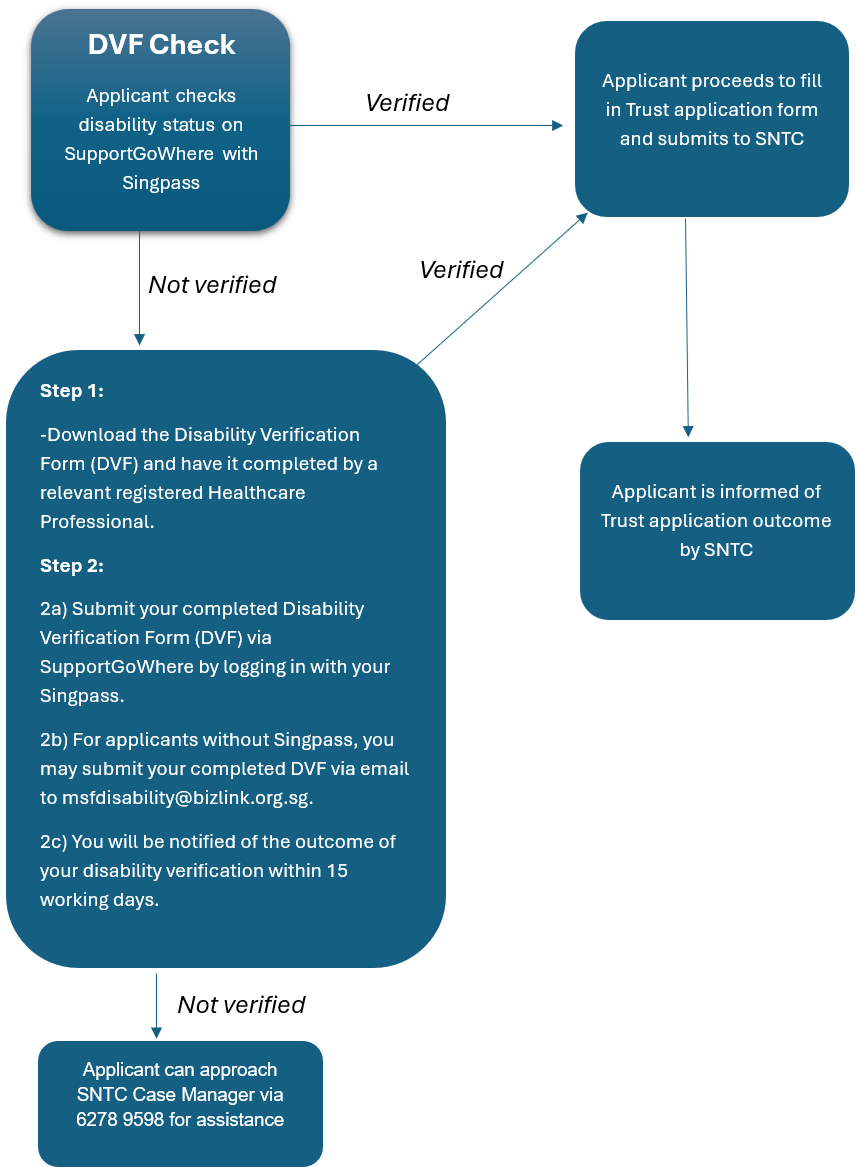
Q: What is the Disability Verification (DV) process like?
A: Here’s an illustration of the user journey for DV when setting up a Special Needs Trust account.
Be A Light in Someone's Darkness
Refer Someone in Need
If you know of someone who will benefit from Special Needs Trust services, please refer them to SG Enable’s Future Care Planning team using the referral form below.
Support Low-income Families
You can also support low-income families with loved ones with special needs by making a kind contribution to the GOAL Sponsorship Scheme.