Disability in Singapore - Types, Statistics, Support
What is Considered a Disability in Singapore?
In Singapore, the Enabling Masterplan defines a person with a disability as someone whose opportunities to secure, retain and progress in education, training, employment and recreation as an equal member of the community are substantially reduced due to physical, sensory, intellectual or autism[1].
While definitions of disability vary across countries, this is the national framework guiding disability policies, services and support in Singapore. As the national agency for disability, SG Enable empowers the disability sector through collaboration, innovation, and partnerships. Together, we strengthen employment, education, and training, creating greater impact for persons with disabilities and their caregivers.
The Ministry of Education oversees support for students with special educational needs, while the Ministry of Health oversees mental health-related services.
What Are the Different Types of Disabilities?
Disabilities can take different forms and may affect a person’s physical, sensory, intellectual, developmental or cognitive abilities in various ways.

Physical Disability
Physical disability refers to a condition that affects a person’s physical ability to perform daily activities[2].
It may result from congenital conditions, illness, injury or other health-related factors, and can vary in its impact on an individual’s independence and participation in society.

Sensory Disability
Sensory disability refers to disabilities that affect a person’s ability to receive and process sensory information, most commonly involving vision or hearing[3], [4].
These disabilities may affect communication, mobility, learning and daily activities, depending on the individual’s needs.
Intellectual Disability
Intellectual disability refers to a condition involving limitations in cognitive functioning and adaptive behaviour, affecting the conceptual, social, and practical skills needed for everyday life[5].
It is defined by a person’s intelligence quotient (IQ of 70 or below) and may occur in individuals with certain genetic or developmental conditions, such as Down syndrome, Prader-Willi syndrome, and Williams syndrome.
Autism
Autism is a neurodevelopmental condition that affects communication, social interaction and behaviour, with support needs varying across individuals[6].
It can present differently from person to person, with each individual requiring different levels of support in daily living, communication or learning.
Support for Persons with Physical Disabilities
SG Enable works with community partners to strengthen the disability ecosystem and enhance support for persons with physical disabilities across areas such as accessibility, employment, and community inclusion. Here are some practical resources that may help you or your loved ones:
Resources on employment, education, therapy, and more for persons with physical disabilities
Social Service Agencies (SSAs) for persons with physical disabilities
Support for Persons with Sensory Disabilities
SG Enable collaborates with partners across the disability sector to promote an inclusive environment for persons with sensory disabilities across areas such as assistive technology, training and consultancy, and employment. Here are some practical resources that may help you or your loved ones:
Resources on employment, education, therapy, and more for persons with sensory disabilities
Social Service Agencies (SSAs) for persons who are deaf or hard of hearing
Social Service Agencies (SSAs) for persons who are blind or have low vision
Support for Persons with Intellectual Disabilities
Here are some practical resources that may help you or your loved ones:
Resources on employment, education, therapy, and more for persons with intellectual disabilities
Social Service Agencies (SSAs) for persons with intellectual disabilities
Support for Persons with Autism
SG Enable works alongside partners across the disability sector to create more inclusive opportunities for persons with autism, including areas such as social innovation, schemes and grants, and community life. Social service agencies and organisations that support persons with autism include:
Statistics of Disability in Singapore
Understanding the prevalence of disability in Singapore helps to highlight the needs of persons with disabilities and the importance of incorporating accessibility features into all aspects of life. Here are some of the key statistics you should know:
Prevalence rate of disability in Singapore
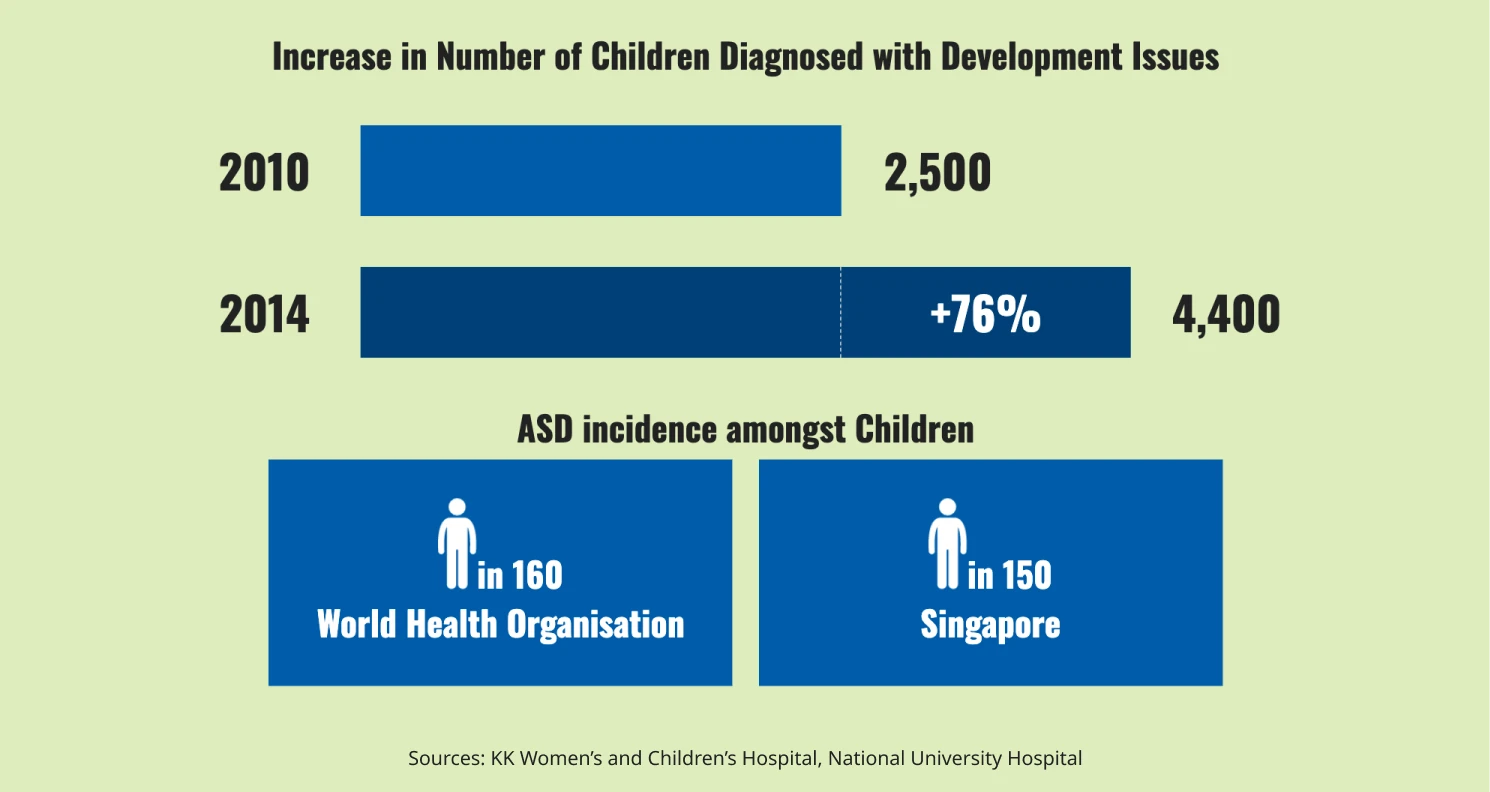
The prevalence of disability in Singapore varies across different population groups. According to the Enabling Masterplan, approximately 2.1% of students, 3.4% of adults aged 18 to 49, and 13.3% of adults aged 50 and above are persons with disabilities[2]. As Singapore’s population ages, the number of persons with disabilities is expected to increase, highlighting the importance of accessible support services and an inclusive society.
| Population group | Approximate prevalence rate |
|---|---|
| Student population | 2.1% of student population |
| 18-49 years | 3.4% of resident population |
| 50 years and above | 13.3% of resident population |
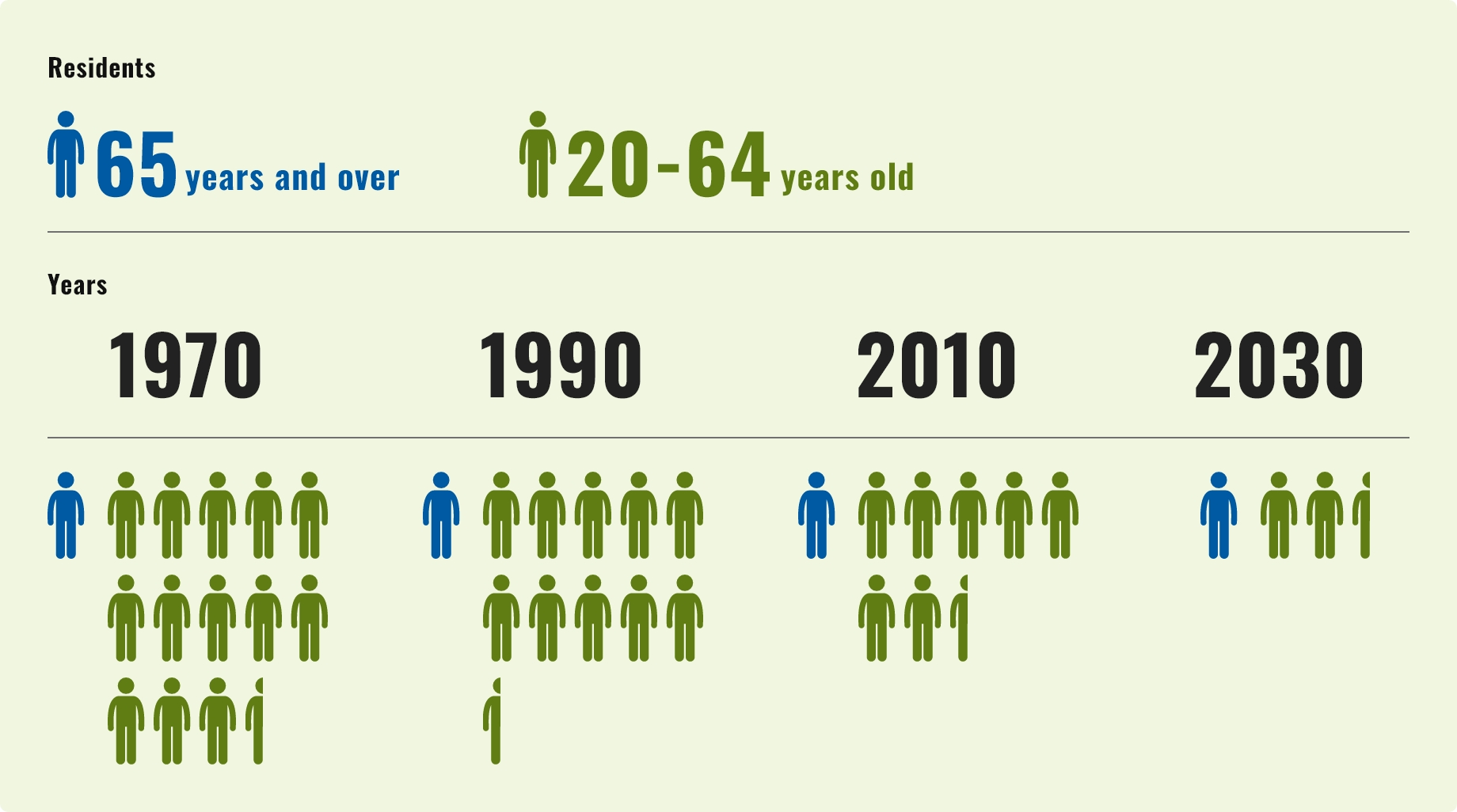
Increasing number of persons with autism
There has been an increase in the number of persons with autism in Singapore, partly due to greater awareness and improved detection. In 2024, it was estimated that 1 in 100 children in Singapore had autism[3]. The number of children diagnosed with developmental issues also increased by 32 per cent from 5,300 in 2019 to 7,000 in 2023[4].
Employment rate of persons with disabilities
Employment provides persons with disabilities with opportunities to participate meaningfully in society and achieve greater independence.
According to statistics released by the government, among residents with disabilities aged 15 to 64 in 2023 and 2024, 34.7% were employed, 3.6% were unemployed and actively seeking work, while 61.8% were outside the labour force, with poor health or disability cited as the main reason5.

Resources for Disability Support in Singapore
Enabling Guide: Singapore’s First-Stop Disability Resource
Developed by SG Enable, the Enabling Guide serves as Singapore's first-stop disability resource, providing people with disabilities, caregivers, and families with easy access to essential information and support.
It brings together practical tips, informative articles, and comprehensive guidance on topics such as education, training institutions, employment, career progression, healthcare, assistive technology, and community services. The platform also helps users navigate available government schemes, grants, and financial assistance, making it easier to understand eligibility requirements and apply for the support they need.
Employment and Hiring for Persons with Disabilities in Singapore
Employment plays an important role in promoting independence, financial stability, and social inclusion for persons with disabilities in Singapore. Whether you are looking for your first job, exploring a career change, or seeking inclusive hiring solutions for your organisation, there is a range of resources and support services available.
Persons with Disabilities Seeking Employment
Whether you are preparing to enter the workforce, looking for a new job, or planning to develop new skills, a range of training and employment resources are available to support your career journey. Find out more about vocational training programmes, skills development opportunities, career guidance, job placement services, and ongoing job support designed to help persons with disabilities find suitable employment and succeed in the workplace.
Employers Looking to Hire Persons with Disabilities
Building an inclusive workplace starts with creating meaningful employment opportunities for persons with disabilities. Employers can access resources and support on inclusive hiring practices, recruitment, workplace accommodations, employee retention, and disability inclusion.
Whether you are hiring persons with disabilities as new team members or strengthening your organisation's inclusion efforts, guidance, training, and available support programmes can help you build a more accessible and diverse workforce.
Disability Schemes and Grants in Singapore
Financial assistance, funding schemes, and support programmes can help reduce barriers and improve access to essential services for persons with disabilities and employers. Whether you are seeking assistance to enhance your quality of life or looking for support to build a more inclusive workplace, there are various schemes and grants available to meet different needs and circumstances.
For Persons with Disabilities
Persons with disabilities and their caregivers can access a range of schemes, grants, and support services to help with areas such as education, employment, assistive technology, transport, caregiving, and daily living. Explore the available programmes to understand the eligibility criteria, application process, and the support that may be available to you.
For Employers
Employers committed to inclusive hiring can benefit from funding and support programmes that facilitate the recruitment, onboarding, and retention of employees with disabilities. Learn about available grants, workplace support initiatives, and resources designed to help organisations create accessible workplaces and successfully integrate persons with disabilities as valued team members.
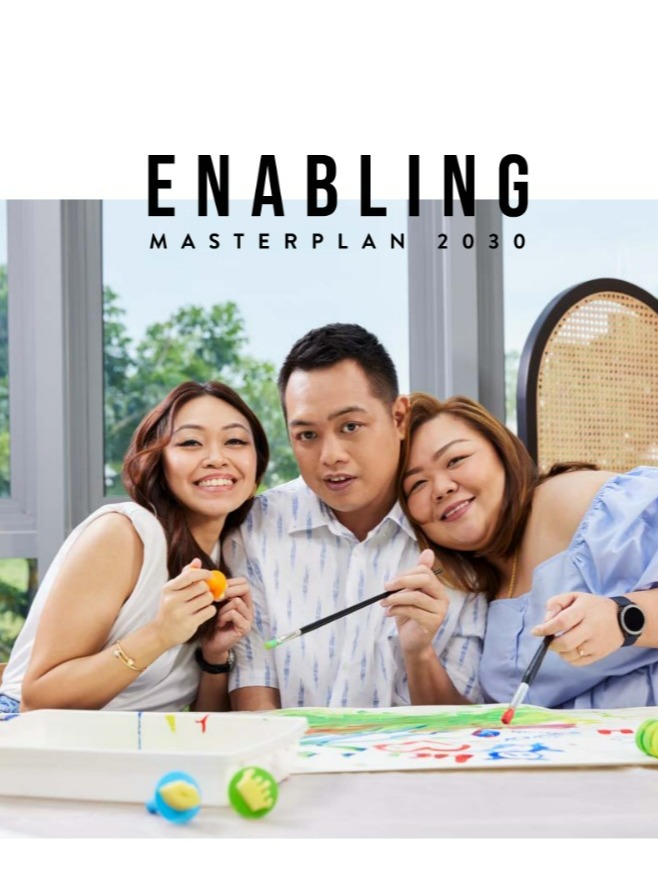
Enabling Masterplan 2030
The Enabling Masterplans are national roadmaps for the government and the community to work together to support persons with disabilities.
Four masterplans have been released since 2007, and Singapore is currently on Enabling Masterplan 2030 (EMP2030). The full EMP2030 report can be found on the Ministry of Social and Family Development’s website. It guides efforts in shaping the future disability landscape until 2030.
SG Enable’s work is also aligned with the recommendations, in training and employment, promoting independent living and creating inclusive environments.
Our Initiatives